




Design system unification
GetFeedback, a CX platform, was born from SurveyMonkey’s acquisition of Usabilla and GetFeedback. This merger aimed to combine their strengths into a seamless customer experience. Success depended on a unified design system that ensured consistency across teams, workflows, and technologies.
ROLE
As a Senior Product Designer, I partnered with Design, Product Management, and Engineering to define strategy, align stakeholders, and deliver a scalable design system.
TIMELINE
Phased transformation over two years.
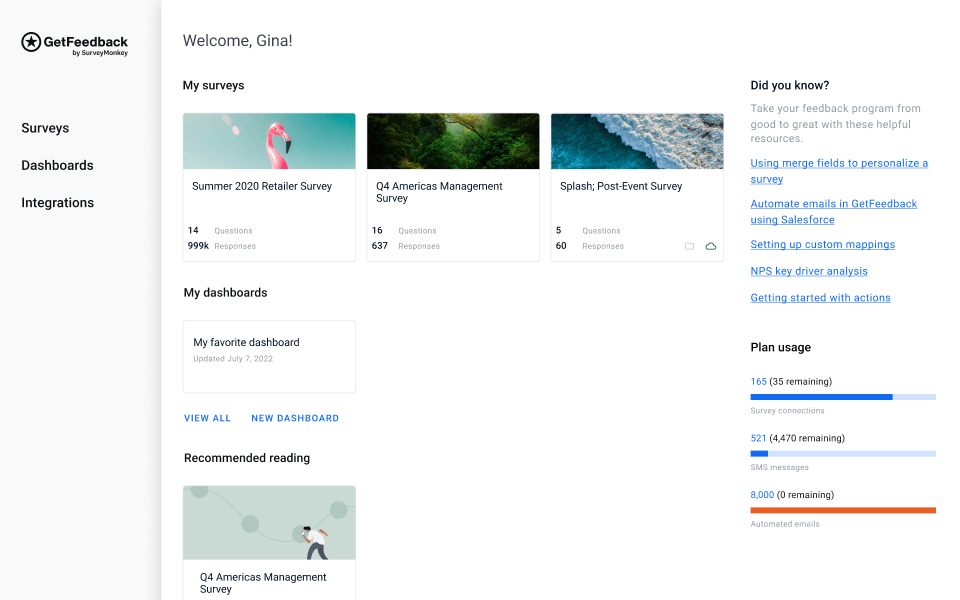
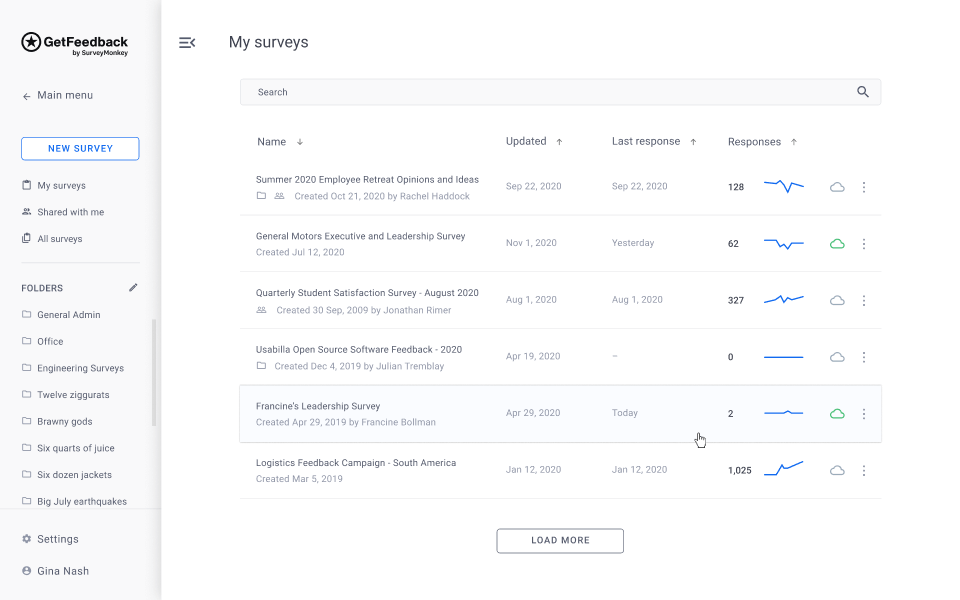
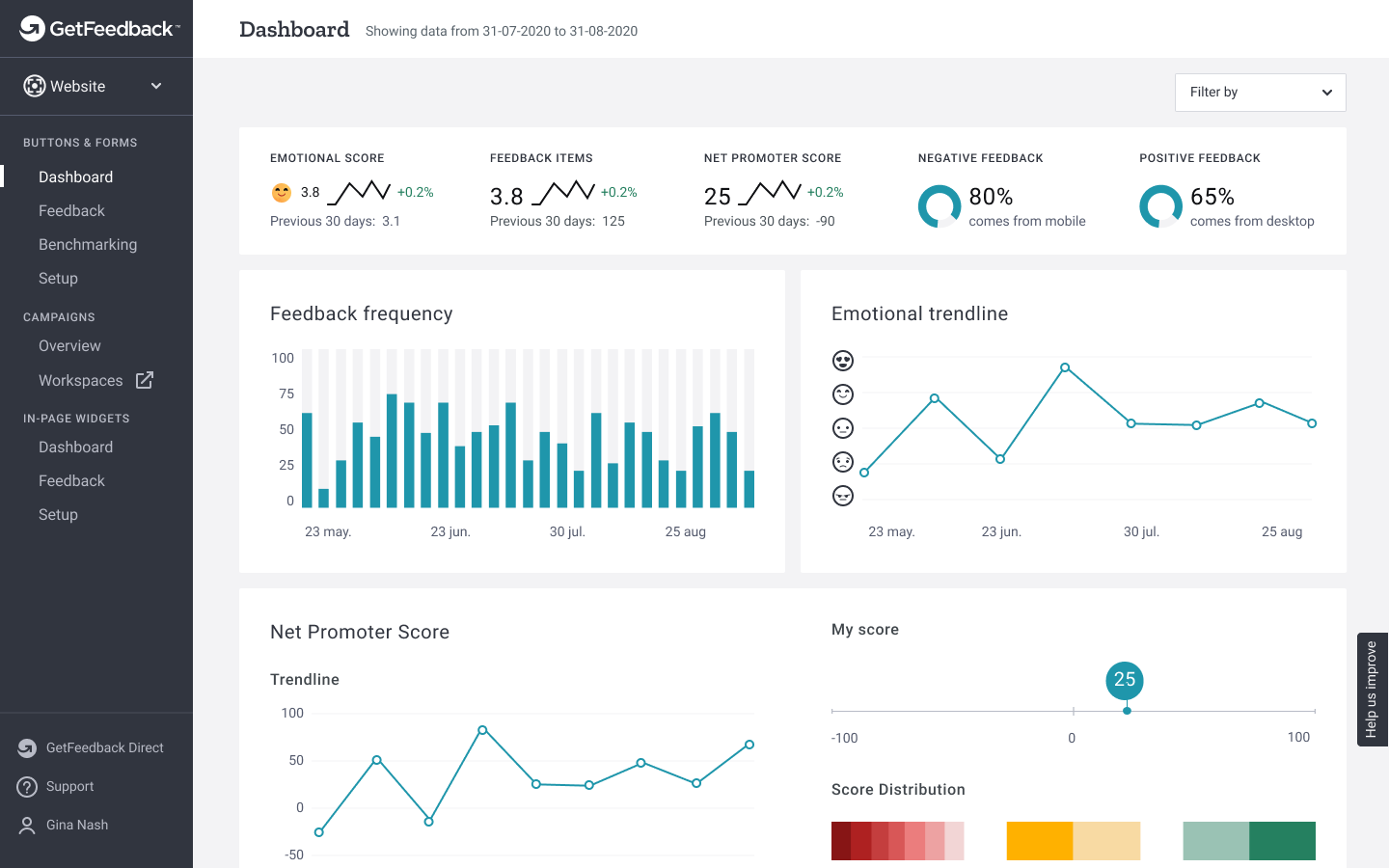
GetFeedback
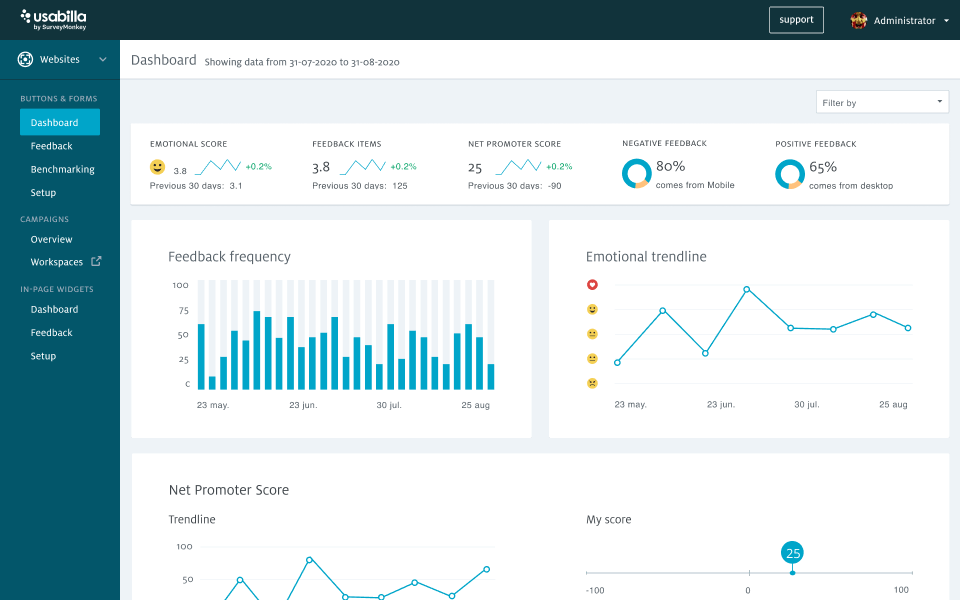
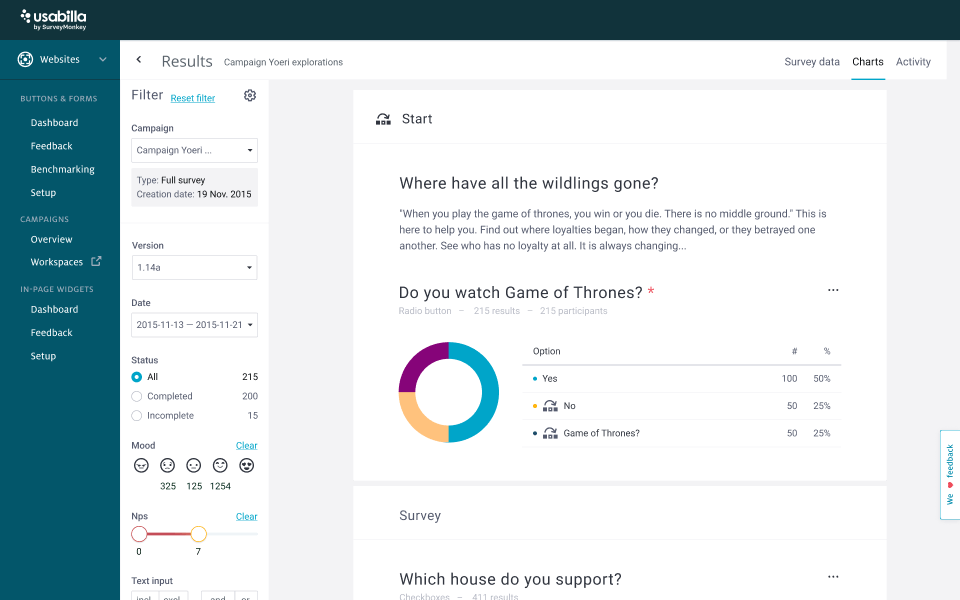
Usabilla
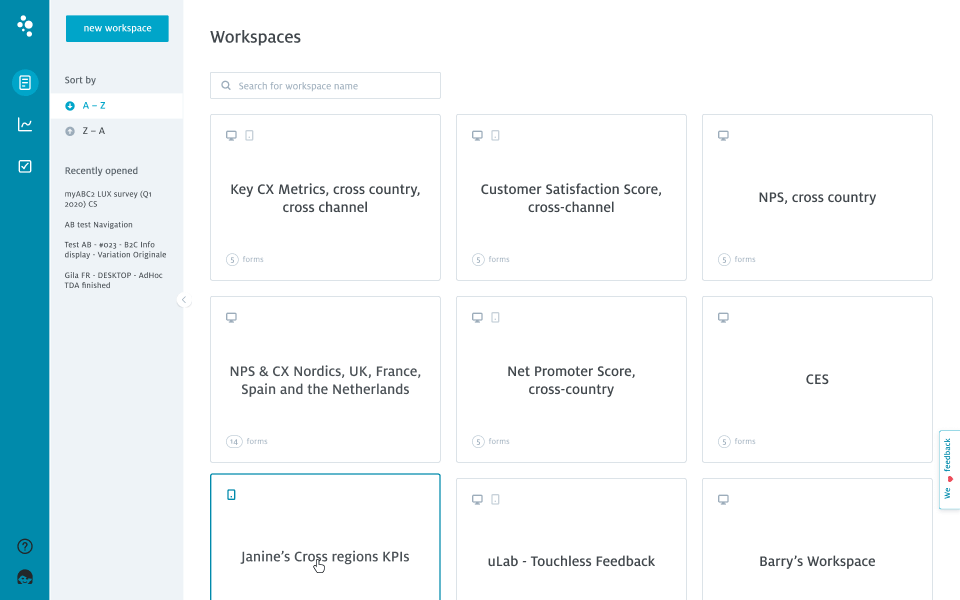
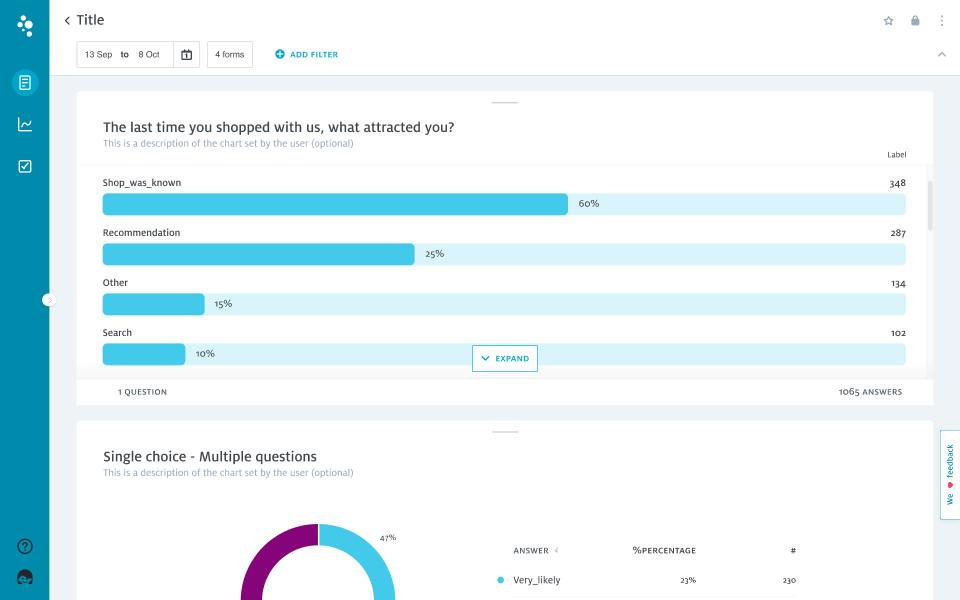
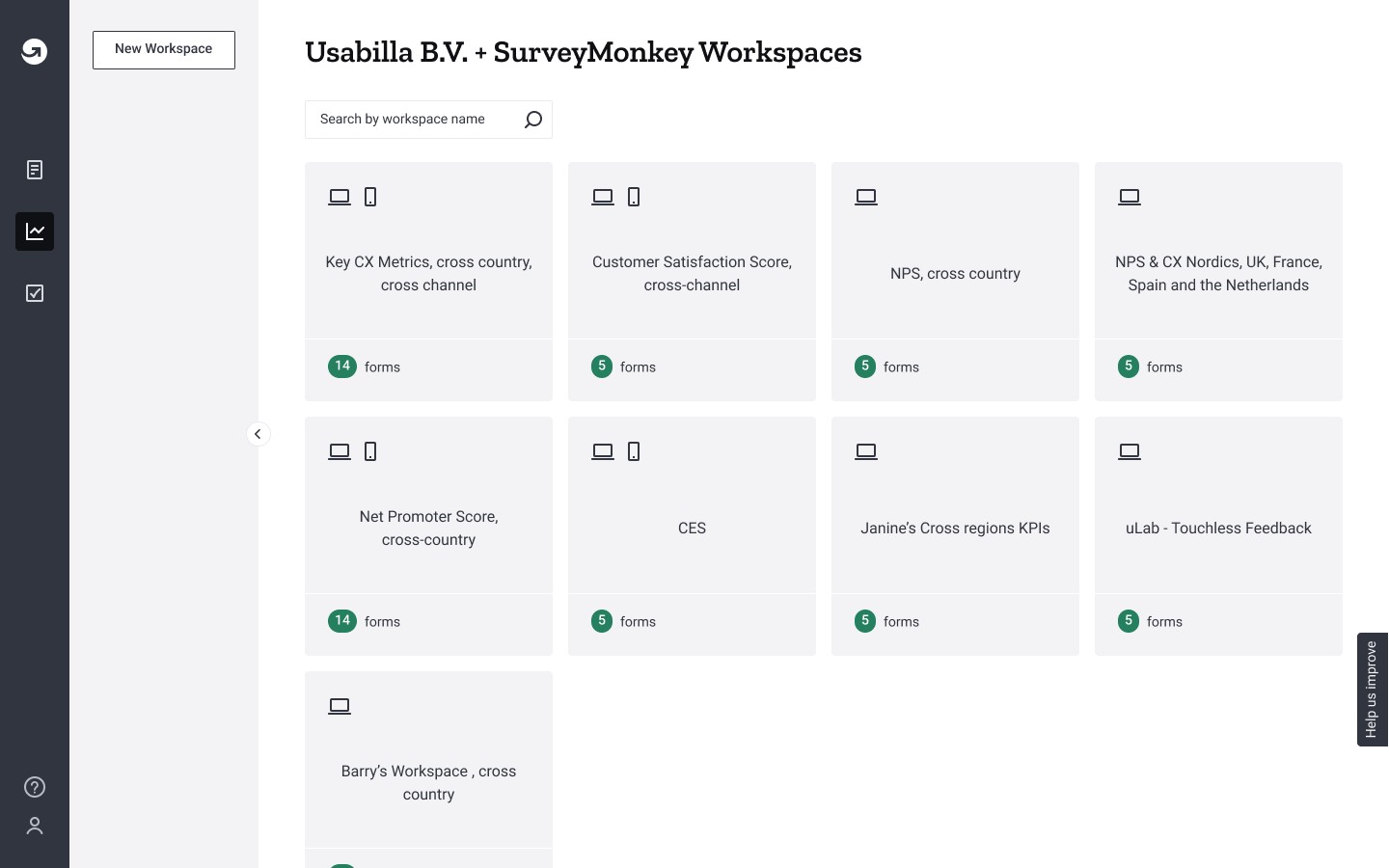
Usabilla Workspaces
My contribution
PROBLEM DISCOVERY
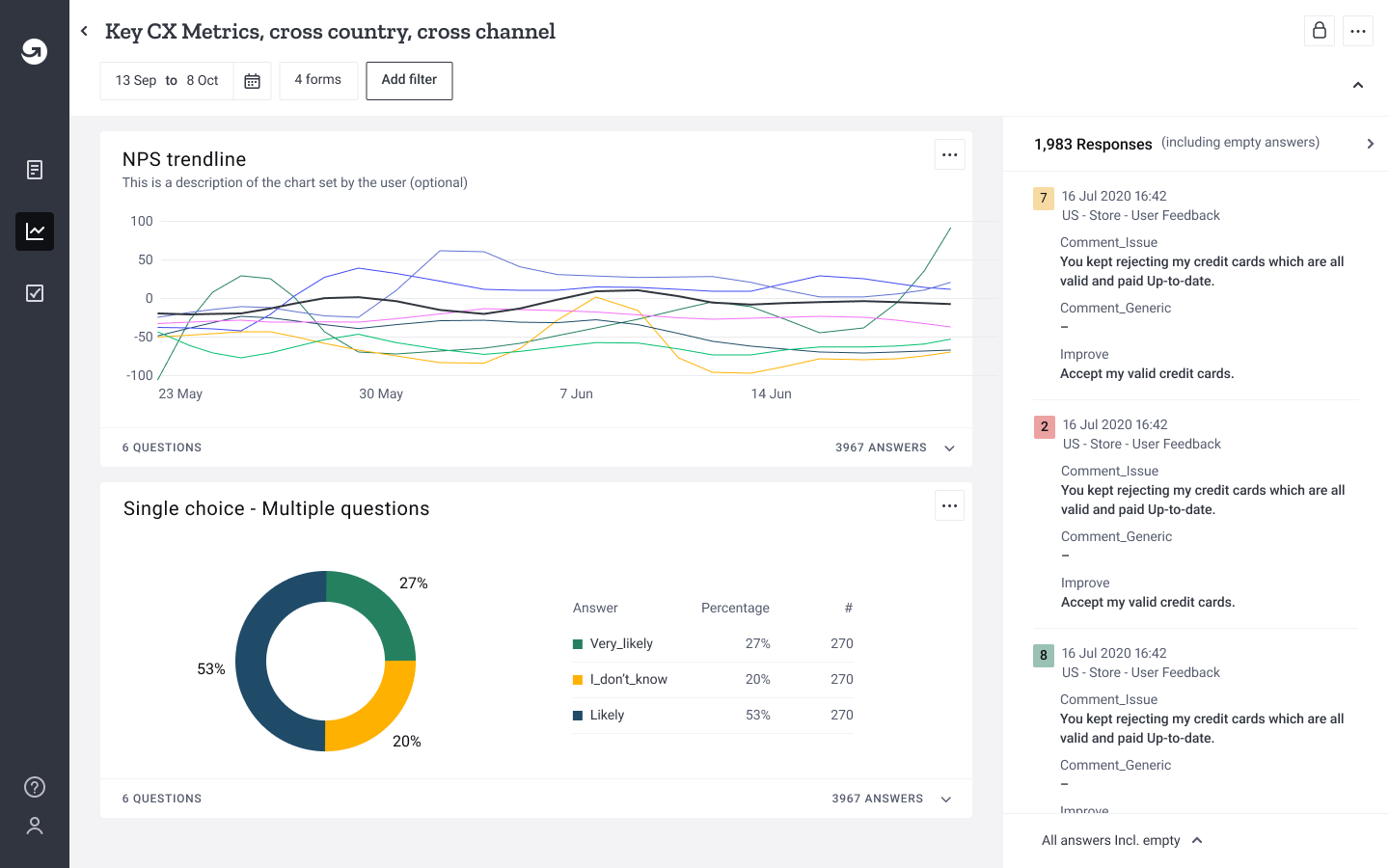
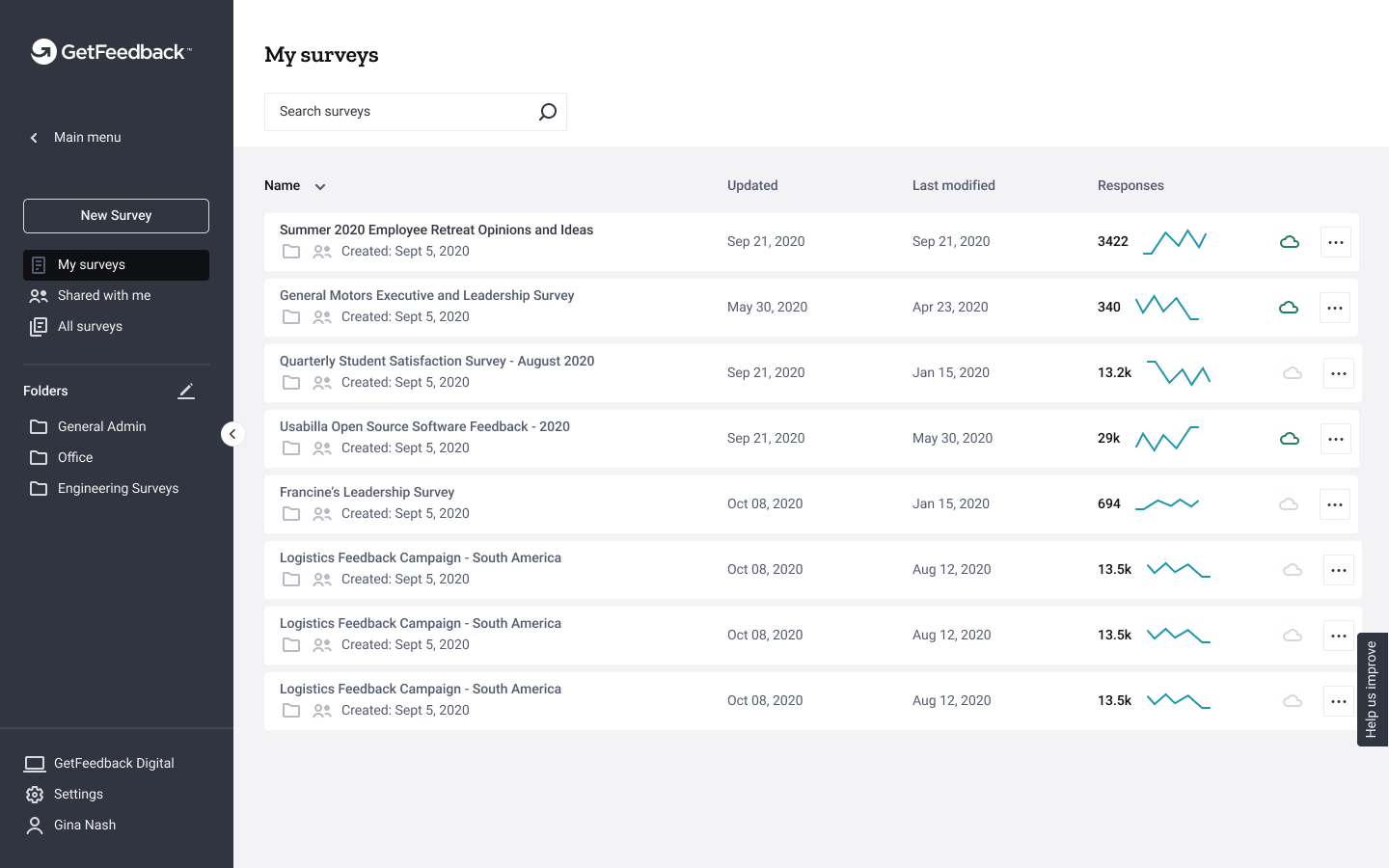
Before we could improve anything, we needed a clear understanding of what was broken. I led product audits and stakeholder interviews to assess the current design ecosystem. This revealed a fragmented landscape of local component libraries, inconsistent patterns, and limited shared assets. Making these issues visible created alignment around the need for a unified, scalable approach.
VISION SETTING
With the problem defined, I worked with cross-functional partners to shape a shared vision for a more cohesive platform experience. This included collaborating with the brand team to develop stylescapes that explored how a unified visual language could feel across the product.
To validate the direction, I tested concepts through desirability studies and created an end-to-end prototype to align stakeholders on future workflows, interactions, and patterns.
ADOPTION STRATEGY
Turning vision into reality required practical tools and clear processes. I translated the design direction into a structured UI kit, reusable components, and detailed documentation to support adoption. Working closely with engineering, I helped migrate assets into a single design system repository, ensuring the new standards could be implemented consistently across teams.
BUSINESS GOAL
Mitigate the risks posed by design system fragmentation and low adoption by creating a unified, scalable design system that supports the efficient execution of the rebranding and unification roadmap.
PROBLEM DISCOVERY
Driving change through clarity
To understand the real scope of the challenge, I conducted a comprehensive audit of our design ecosystem and facilitated interviews with designers, product managers, and engineers across teams. This work revealed a fragmented system built on multiple local component libraries with minimal shared standards.
The result was clear:
- Inconsistent patterns across similar workflows
- Redundant components and duplicated effort
- Slow handoffs between design and engineering
- Difficulty scaling new features across the platform
DESIGN SYSTEM REPOSITORY OVERVIEW
By visualizing this fragmentation and mapping concrete examples, I helped stakeholders see the full impact of the problem. What had previously felt like isolated issues became a shared, organization-wide priority to unify the system.
VISION SETTING
Defining a connected platform experience
With a clear understanding of the gaps, I partnered with leadership, product, and the brand team to define a unified design direction. The goal was to create a cohesive experience that felt consistent, modern, and scalable across the newly combined CX platform.
STYLESCAPES
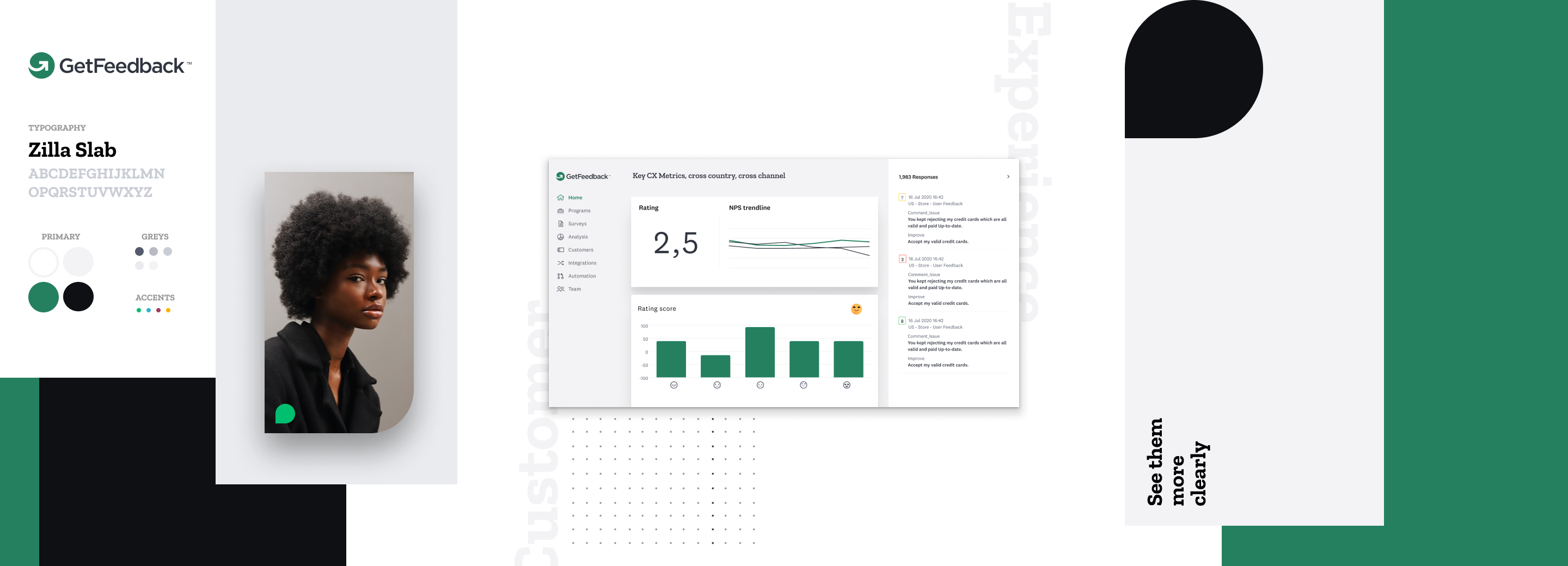
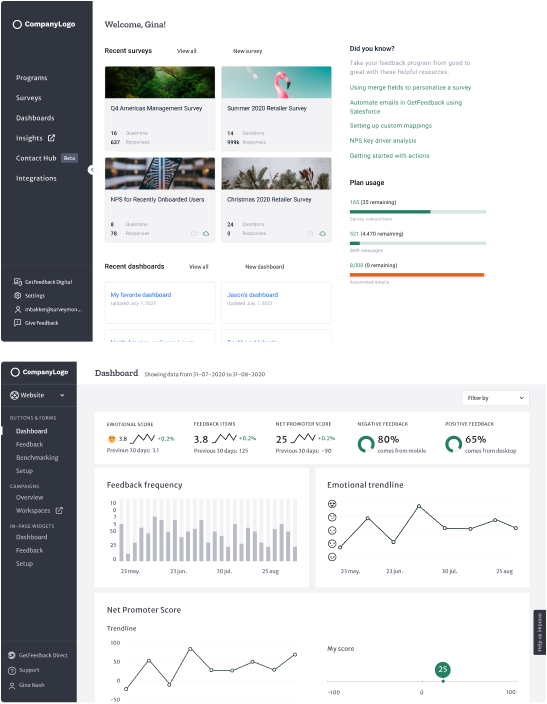
Together with the brand team, I helped develop visual stylescapes that explored how the refreshed brand identity could translate into product UI. These explorations provided a tangible way to discuss tone, personality, and visual direction with stakeholders.
VALIDATION THROUGH TESTING
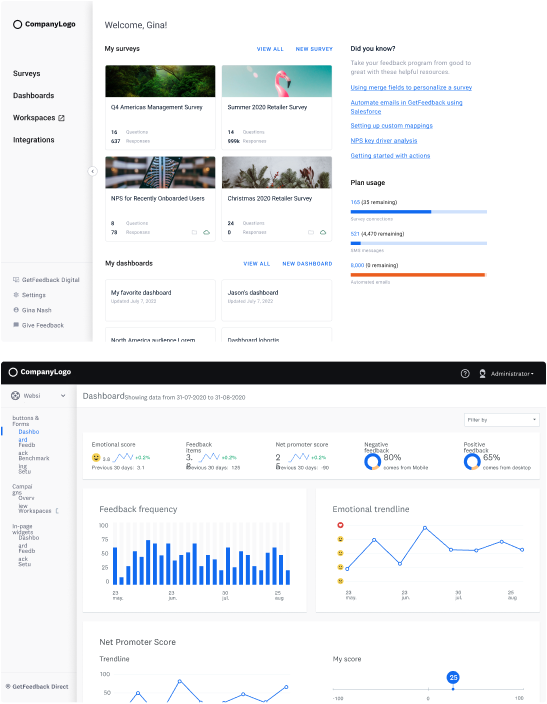
To ensure the direction resonated with users, I tested multiple concepts in a desirability study. Participants evaluated designs on criteria such as trust, professionalism, and ease of use. The unified approach consistently received stronger emotional responses and clearer perception of quality.
CONCEPT A
CONCEPT B
ATTRIBUTES WE WERE DRIVING FOR
Compelling vs Plain
Welcoming vs Unapproachable
Professional vs Unprofessional
Fresh vs Dated
Sophisticated vs Ordinary
Simple vs Complex
Trustworthy vs Not Secure
METHOD
Unified Look & Feel Desirability Study
AUDIENCE
Employed Full time
Uses Enterprise tools e.g CRM, Marketing Automation or Project Management
832 respondents
KEY TAKEAWAYS
The Unified design received high ratings for the following criteria
Welcoming
Professional
Trustworthy
ALIGNING ON FLOW AND INTERACTION
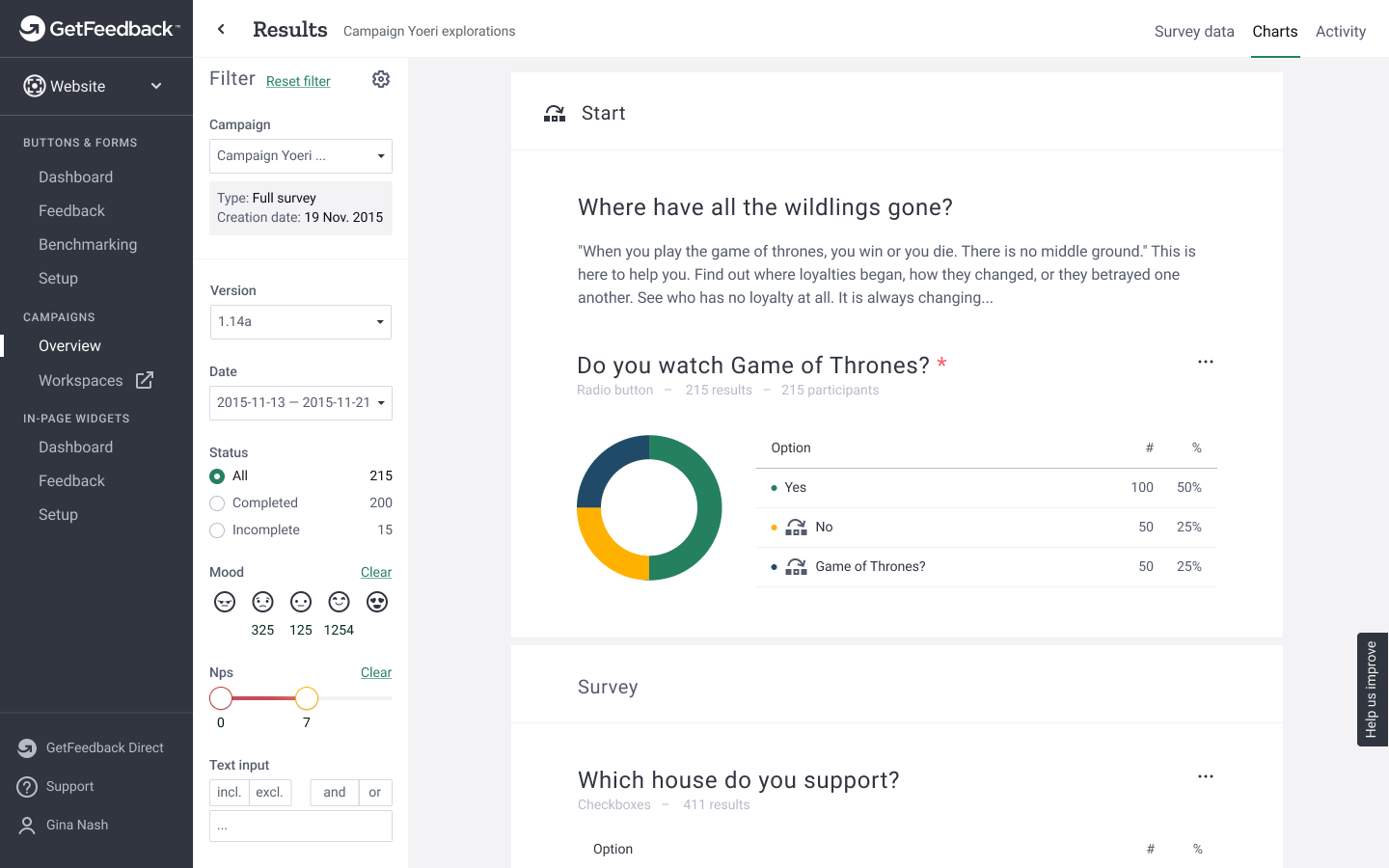
I then created a high-fidelity end-to-end prototype to bring the vision to life across real workflows. This prototype became a critical alignment tool, helping teams understand how the rebranded product would look, feel, and behave in practice before implementation began.
ADOPTION STRATEGY
From vision to execution
A strong vision only matters if teams can use it. My focus shifted to making the new direction practical, repeatable, and easy to adopt across the organization.
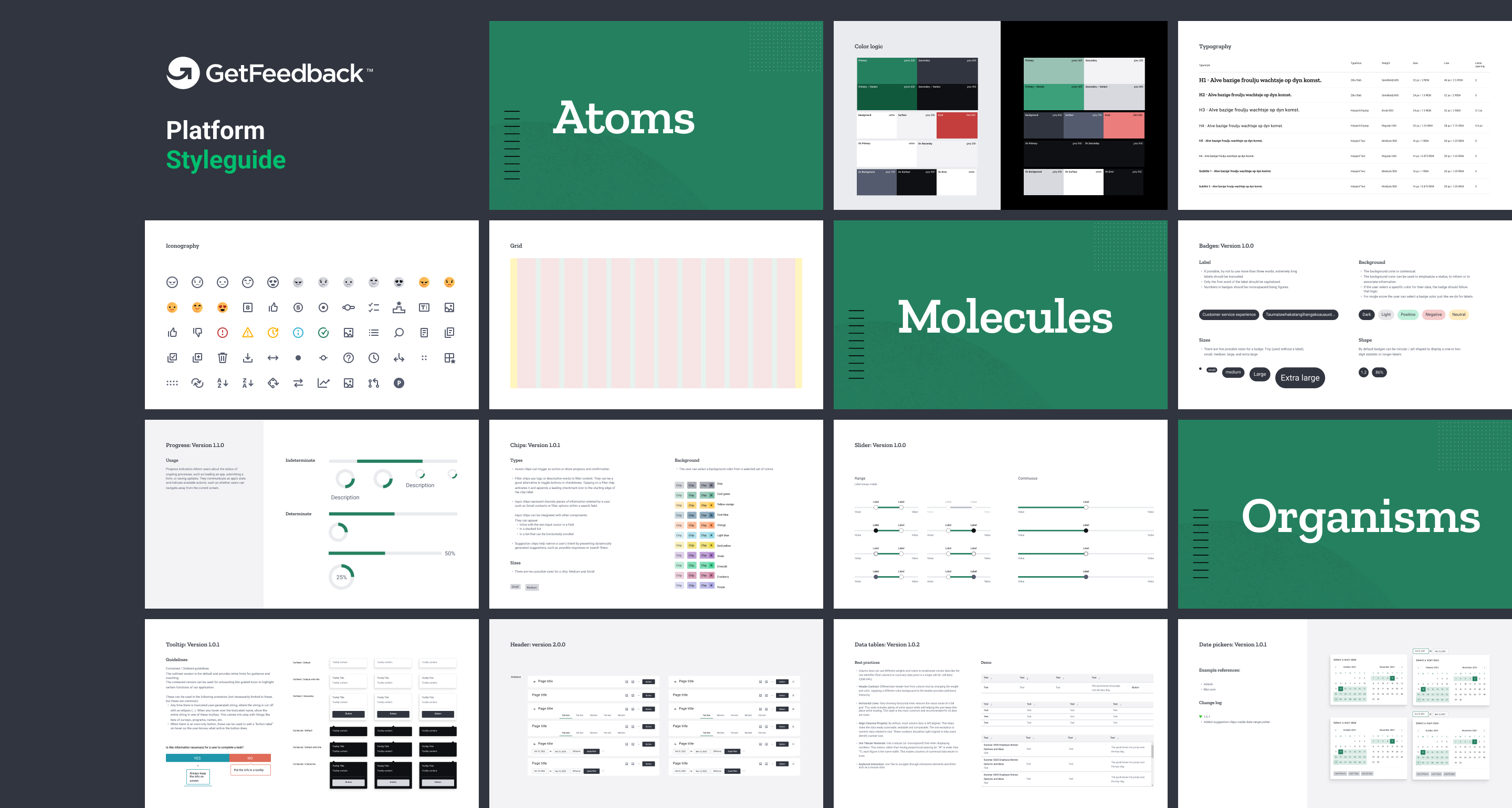
SYSTEMIZATION
I translated the validated vision into concrete tools:
- A structured UI kit with reusable components
- A centralized icon library
- Standardized templates and patterns
- Clear, scalable style guides
These assets gave designers and engineers a reliable foundation to build from, reducing guesswork and inconsistency.
Atoms (color logic, type styles, grid)
Molecules
Organism
Whiteframes
Illustrations
Usage guidelines
BUILDING A SINGLE SOURCE OF TRUTH
A major priority was consolidating scattered design resources into one unified repository. I worked closely with engineering to migrate and refactor components, aligning them with the new standards and ensuring technical feasibility.
This collaboration enabled:
- Consistent implementation across teams
- Faster updates to shared components
- Clearer handoffs between design and development
- Long-term maintainability of the system
By focusing on practical adoption, we turned the unified vision into an operational reality that teams could use every day.
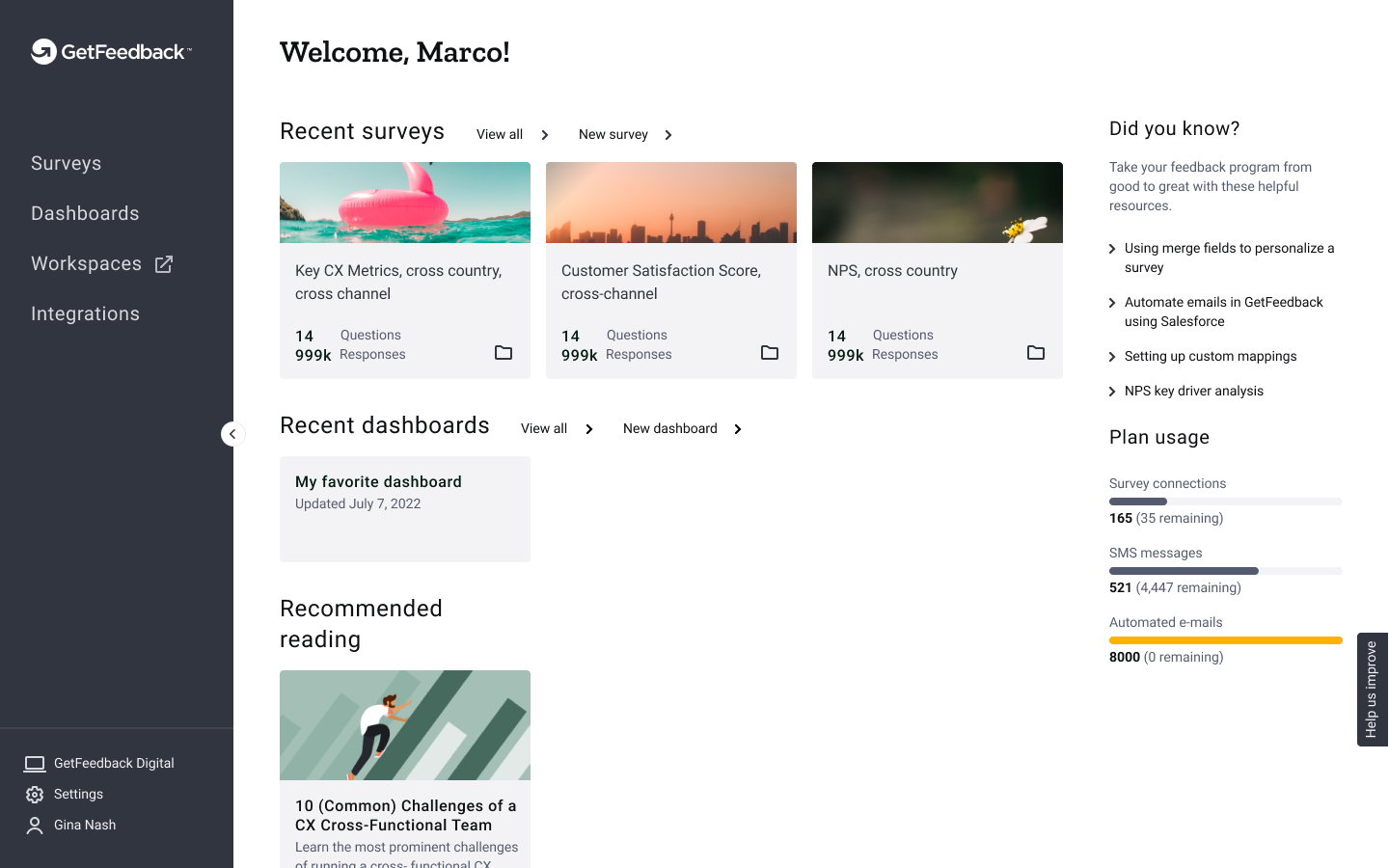
Outcomes & Impact
The unified design system delivered tangible benefits across the organization:
Consistent User Experience
Users could move seamlessly across products without encountering conflicting patterns or styles.Faster Delivery
Shared components and standards reduced rework and accelerated feature development.Stronger Brand Presence
A cohesive visual language reinforced trust and recognition across all touchpoints.Better Collaboration
A single source of truth improved alignment between design and engineering.Resource Savings
Eliminated duplicate effort and freed teams to focus on higher-value UX improvements.